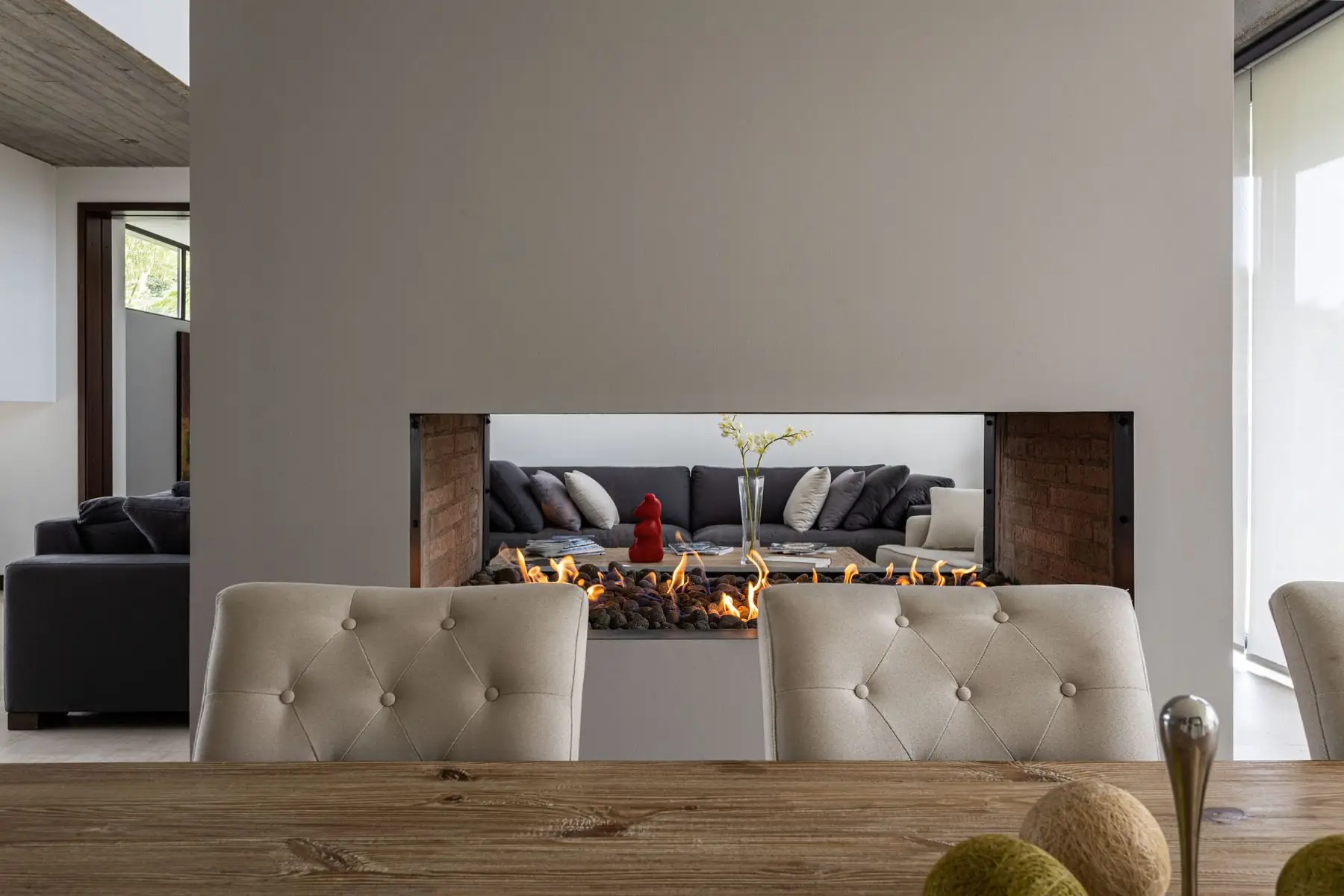
Why won't my gas fireplace light, or stay lit?
Most of the time the pilot is out, the igniter's battery is dead, or the flame-sensing part, a thermocouple or thermopile, is dirty or worn and shuts the gas off. A clogged pilot or a failing gas valve are the next suspects. Any whiff of gas ends the troubleshooting: get everyone out, then phone the utility once you are outdoors.
Philly Chimney & Fireplace Repair · November 10, 2026
First, any gas smell
Before you try anything, sniff. If the room smells of gas, stop. PGW tells Philadelphia customers to leave right away and call its 24-hour line, 215-235-1212, from a safe place, without using light switches, phones or flames inside. PECO's brochure says to go at least 100 feet away and call 800-841-4141 from outside. UGI customers should get well clear and call 911 or 800-276-2722.
Gas is common here. In the 2024 Census survey, about 70% of Philadelphia homes heated with utility gas, and about half in Montgomery County, so plenty of fireplaces run on it too.
Checks you can safely do
With no gas smell, a few simple checks fix a surprising number of no-light calls:
- Make sure the gas shutoff valve to the fireplace is open. It is often a key valve in the floor or wall nearby.
- Replace the batteries in the remote, the wall switch receiver and, on many newer units, the battery backup for the igniter.
- Follow the relighting steps printed on the label inside the unit or in the manual, exactly as written.
- A pilot that catches, then dies the moment you release the knob, is worth noting before you go further; that pattern points to the flame sensor.
- Don't take the gas valve or burner apart yourself.
Why it lights and then goes out
Most gas fireplaces have a safety part that sits in the pilot flame. A thermocouple, or a thermopile on units that also power the controls, makes a small electric current only while the pilot is hot. If the pilot flame is weak, dirty or not wrapping the sensor, or the part is worn, the current drops and the valve shuts off the gas. That is the system working as designed.
Soot or a spider web in the pilot tube, a bent pilot hood or a pilot flame that is lazy and yellow all lead to the same symptom. So can a vent problem: if exhaust is not leaving properly, some units cut out to protect you. A gas valve that clicks but sends no gas, or an igniter that sparks weakly, are less common, and both are easy to confirm with a meter during a diagnosis.
Typical part prices
These are typical 2026 installed ranges in our area. The diagnosis itself is free, and we tell you which part is at fault before anything is replaced.
- New igniter: $90–$150.
- Replacement pilot assembly: $100–$350.
- Thermocouple swap: $150–$350.
- Gas valve: $150–$300.
Keep it from happening again
A yearly service catches most of these failures before the first cold night: the pilot assembly and burner are cleaned, the sensor is checked, the glass and gaskets are looked at, and the vent is confirmed clear. We quote an annual gas-fireplace tune-up during the free visit.
PGW advises having gas appliances inspected every year and keeping a working carbon monoxide detector. If your fireplace vents through an old masonry chimney, have the chimney checked as well; UGI warns that a blocked or damaged chimney can let exhaust, including carbon monoxide, into the home.
Answers
Follow-up questions
My pilot lights but goes out when I release the knob. What is wrong?
Usually the thermocouple or thermopile, or a pilot flame that is not reaching it. A dirty pilot can cause the same thing, so it is worth a diagnosis before buying parts.
Is it safe to keep relighting the pilot?
Follow the manufacturer's relighting steps a couple of times at most. If it keeps going out, or you smell gas, stop and get it checked.
Do you service gas fireplaces in the suburbs?
Yes. We work across Philadelphia, Delaware County, and Montgomery, Bucks and Chester counties, plus Reading and Lancaster, with 3-hour arrival windows Sunday through Friday.
Next up
Other Philly chimney notes
 My neighbor built above my chimney. Who has to fix it in Philadelphia?When the house next door goes up a floor, your chimney can end up too short. What Philadelphia's B-3307.1 makes the builder offer, and when it's on you.
 Does my chimney work need Philadelphia Historical Commission approval?On a designated Philadelphia property, chimney pointing counts as an alteration. How staff review works, the mortar sample, and the Diamond Street B-vent rule.
 What chimney and carbon monoxide rules apply when I sell a Philadelphia house?Philadelphia sellers certify smoke and CO alarms in writing. The PA REALTORS® form asks when chimneys were last cleaned. What the law asks and what it doesn't.

Schedule
Choose a morning or an afternoon.
Sunday through Friday, arrival between 8 and 11, 11 and 2, or 2 and 5. The look costs nothing, and a person phones you the day before.