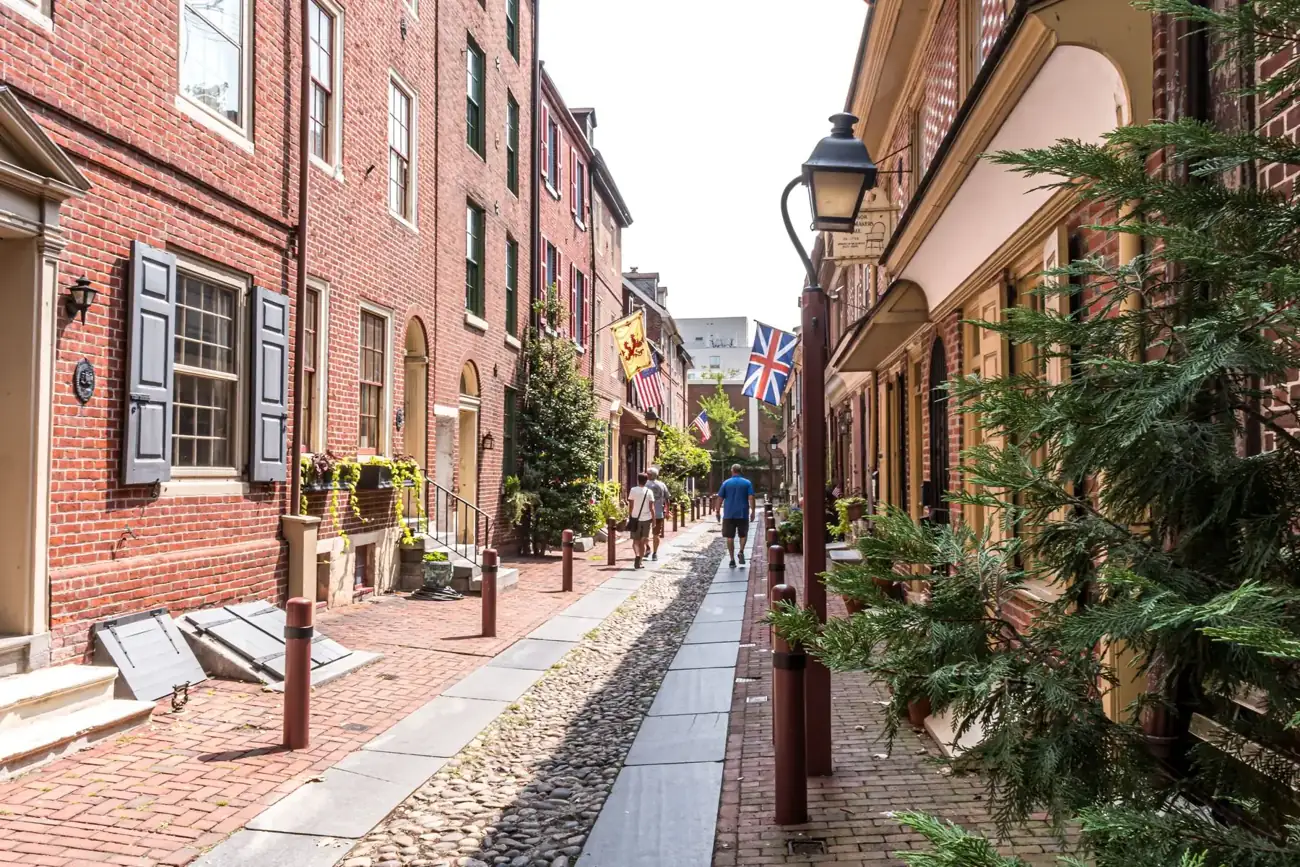
Chimney Work in Philadelphia's Historic Districts and Beyond
In a Philadelphia historic district, repointing a chimney counts as an alteration. That sounds worse than it is: Historical Commission staff can approve most pointing and like-for-like repairs. We help you prepare the photos, mortar sample and written scope they look for.
The Philadelphia Historical Commission's rules define reroofing, cleaning and pointing masonry as alterations. On an individually designated property, or any house inside one of the City's historic districts, from Society Hill, Old City and Washington Square West to Spring Garden, Rittenhouse-Fitler, Parkside, Diamond Street, Overbrook Farms and Main Street Manayunk, that means the work is reviewed before it starts. L&I's permit page says pointing often needs no permit, but only as long as the property is not on the historic register.
Review is not a wall. The Commission's rules let its staff approve standard maintenance, pointing included, and the replacement of deteriorated features with matching ones, without sending the job to the Architectural Committee. What staff wants to see is work that matches what is already there. That is mostly a matter of documentation and the right mortar, and that is where we come in.
When to call
- Your house is in a Philadelphia historic district or individually designated
- Mortar is washing out of the chimney joints or brick is spalling
- An earlier repair used hard gray cement on soft red brick
- You want to take a chimney down, or vent a new furnace through it
- You live in West Chester, Doylestown or Columbia and the chimney faces the street
The visit, step by step
- Free inspection and photosWe photograph the chimney from the roof and the street and note the brick, mortar color, joint width and tooling.
- Written scopeA plain scope of work: what gets repointed, what is replaced in kind, and with what mortar.
- Help with the submissionWe help you prepare the photos, scope and mortar sample. The application and the approval are yours, with the Commission or the review board.
- Sample, then the workWhere a sample is required, a test patch goes up first and is reviewed in the field before the full job.
What the Philadelphia Historical Commission looks for
Pointing a chimney on a designated property needs Commission review because its rules count pointing as an alteration. Staff can approve it, along with in-kind replacement of deteriorated features and work on secondary elevations that face service alleys or have limited visibility from the street. The Commission's September 2026 permit log shows how this works in practice: repointing approvals carry a condition that staff review a masonry pointing sample in the field.
So plan on a test patch. We point a small area in the proposed mortar, matched for color, texture and tooling, and it is reviewed before the whole chimney is done. The Commission's Diamond Street district manual describes the standard: new mortar should match the old in color, texture, tooling and composition, be soft enough, and go into joints raked out by hand. It also says the work should only be done when the temperature will stay at 45°F or above for 72 hours, which shapes the calendar.
To confirm whether your address is designated, the City publishes its historic district list, and the Historical Commission answers questions at 215-686-7660.
Taking a chimney down, or running a vent through it
Chimneys are not minor details to the Commission. In its July 2020 minutes, the Architectural Committee called an existing chimney a character-defining feature and approved a Porter Street project on condition that the chimney above the roof be kept. For a house on Wharton Street, it wrote that the corbelled chimneys should be repaired rather than removed. If you hope to take a chimney down, expect a harder conversation than a repair would bring.
Venting is the other trap. The Diamond Street manual says the Commission does not approve metal "B" vents sticking out of chimneys, and points owners to terra cotta liners or a metal liner cut off below the brick. That manual was written for one district, but it shows how staff think. When a furnace or water heater change calls for relining, we plan the liner to end below the top of the brick. The same manual advises against coating chimneys in tar, cement or stucco, and says even unused chimneys should be kept in good repair and capped.
West Chester, Doylestown, Lancaster and Columbia
West Chester's Historical and Architectural Review Board guidelines call historic chimneys significant features of a building's character and ask that a replacement be an accurate reproduction based on physical or pictorial evidence. If an interior chimney is removed, the part above the roof should be preserved or rebuilt, and braced. For repointing, the guidelines say new pointing should not have a high Portland cement content, and they recommend 1 part white Portland, 1 part lime and 5 parts sand for historic chimney brick.
Doylestown's HARB, in place since 1970, reviews exterior changes visible from a public street or way, and the borough issues permits only after Council grants the certificate. Lancaster city works differently: its page states that the Historical Commission does not review roofing or masonry work in the Heritage Conservation District, though the city has a separate HARB district with its own rules, so check which one your house is in. In Columbia borough, the historic district ordinance pre-approves repointing done in line with NPS Preservation Brief 2, and lists deteriorating exterior chimneys among its examples of demolition by neglect.
In other boroughs and townships, we check what your local review board and code office require before work starts.
The mortar question
Every historic review comes back to mortar. Park Service guidance on repointing wants the new joint weaker and more breathable than the masonry, and never harder than the original mortar, and that masonry cements generally are not recommended for historic buildings. Mortar tougher than the brick has no give, so the brick cracks and sheds its face instead.
We look closely at the existing mortar, match its color and sand, and use a lime-rich mix a review board will recognize. Repointing typically runs $500 to $2,500 for the stack. When the top is beyond repointing, rebuilding from the roofline in matched brick typically runs $1,000 to $3,500, and like-for-like rebuilding is the kind of work staff can approve.
Answers
Historic District Chimney Repair questions
Do I need Historical Commission approval to repoint my chimney?
If your property is designated or sits in a Philadelphia historic district, yes. The Commission's rules treat pointing as an alteration, but its staff can approve pointing without a full committee hearing. Expect a mortar sample to be reviewed in the field.
How can I check whether my house sits inside a historic district?
The City publishes its list of historic districts on phila.gov, and the Historical Commission can confirm a specific address at 215-686-7660.
Can I remove the chimney above my roof in a historic district?
It is difficult. In 2020 the Architectural Committee approved one South Philadelphia project only on condition that the chimney above the roof was kept, calling it character-defining. Repair is the expected answer.
Will the Historical Commission let me run a metal vent pipe out of my chimney?
Its Diamond Street manual says the Commission does not approve metal B-vents sticking out of chimneys, and suggests terra cotta liners or a metal liner cut below the brick. We plan relining that way.
Does West Chester's HARB regulate chimney mortar?
Its guidelines ask for pointing that matches the original and is not high in Portland cement, with a recommended chimney brick mix of 1 part white Portland, 1 part lime and 5 parts sand.
Does Lancaster's Historical Commission review masonry work?
No. The city's page says the Commission does not review roofing or masonry work. Columbia borough, also in Lancaster County, pre-approves repointing done to NPS Preservation Brief 2.
Same family of jobs
Brick, stone, water and rebuilding

Schedule
Choose a morning or an afternoon.
Sunday through Friday, arrival between 8 and 11, 11 and 2, or 2 and 5. The look costs nothing, and a person phones you the day before.