
My neighbor built above my chimney. Who has to fix it in Philadelphia?
Philadelphia Regulation B-3307.1 puts the first move on the builder. If an addition rises above your roof and your chimney or vent sits within 10 feet, the builder must notify you at least 60 days ahead and offer to fund or perform the extension under a separate permit you authorize. Turn the offer down or ignore it, and keeping your equipment safe becomes your job.
Philly Chimney & Fireplace Repair · November 2, 2026
Why a taller house next door matters
A rowhouse chimney was built to clear the roofs around it. When the house next door adds a third floor or a roof deck, the top of your flue can end up sitting below a wall, and the wind that crosses that wall pushes exhaust back down instead of letting it rise. Licenses and Inspections (L&I) says it plainly in its training slides on chimney and vent extensions: building higher than a neighbor's chimney obstructs airflow and leads to increased fire risk, potential carbon monoxide poisoning and appliances that run poorly.
The 2021 International Residential Code, in force in Pennsylvania since January 1, 2026, sets the usual target in section R1003.9: a chimney should rise 2 feet or more above any part of a building within 10 feet, and 3 feet or more above its roof penetration. A new third floor next door can wipe out that margin overnight.
What the builder has to do
The City adopted Regulation B-3307.1, Chimney and Vent Clearance on Properties Adjoining Construction Sites, for exactly this situation. L&I's information sheet P_062_INF says it applies to permit applications filed on or after January 1, 2024. The steps it sets out are specific.
- Written notice on the City's form, mailed to the owner address on file with the Office of Property Assessment, at least 60 days before work starts.
- The notice has to describe the work, explain its effect on your chimney or vent, and offer to secure the permits and fund or perform the extension.
- If you do not answer, a final notice must arrive no less than 10 days before work begins.
- The extension needs its own mechanical permit, and you are the one who authorizes it.
- Proof of compliance is due before the new building rises above your roofline. L&I says it will take enforcement action if the building goes up first.
Saying no, saying nothing, and old defects
This is the part most neighbors miss. Under B-3307.1.2, if you reject the offer or never respond, the builder is released and you become responsible for keeping your existing equipment safe. L&I's construction-next-door FAQ repeats the point: refuse or fail to respond, and the corrections are yours.
The rule also separates new problems from old ones. Any defect your chimney, vent or appliance already had before the extension is the owner's to fix (B-3307.1.3). If a Pennsylvania professional engineer finds the extension cannot be built safely until those defects are corrected, you have 60 days from that notice to correct them.
There are two exceptions where no extension is owed: the chimney no longer serves any fireplace or appliance, or an architect or engineer states that your chimney already meets code.
When it goes wrong
Community Legal Services described one case in its June 2026 Rowhouse Protection Project report. A Graduate Hospital homeowner's neighbor built a third-floor addition in 2023. In 2024, PGW found elevated carbon monoxide at her furnace and shut off her gas. A chimney contractor then found her chimney had been sealed over with plywood and black tar, and no extension had ever been built. CLS won a $4,600 judgment for her in May 2026.
CLS offers this help to households at or below 60% of Area Median Income (215-981-3700). Anyone can report a problem with construction next door to the City by calling 311.
How we help
If a notice arrives, or the walls next door are already going up, call us before you sign anything. Our inspection is free. We photograph the top of your chimney, check every flue in the stack, note which appliances vent through it and write down any defects that were already there, since those stay with you under the rule. An extension when a neighbor builds higher is priced at the inspection. If the stack itself needs work first, repointing typically runs $500–$2,500 and a rebuild from the roofline $1,000–$3,500.
Party-wall stacks need extra care. No Philadelphia rule we found decides who owns or pays for a shared stack in general; it depends on which flue serves which house and on your deeds. We document both sides so you and your neighbor are working from the same photos.
Answers
Follow-up questions
Does the builder have to pay for my chimney extension?
The builder has to offer to fund or perform it. If you accept, the work goes ahead under a separate mechanical permit you authorize. If you reject or ignore the offer, Regulation B-3307.1.2 makes you responsible.
How much warning will I get?
At least 60 days of written notice before work starts, and a final notice no less than 10 days ahead if you have not answered. L&I says the 60 days can be waived if both owners agree.
My chimney had cracks before the construction. Who fixes them?
You do. Defects that existed before the extension are the owner's responsibility under B-3307.1.3, and if an engineer says they block a safe extension, you get 60 days to correct them.
What if my fireplace is not used anymore?
If the chimney no longer connects to any fireplace or appliance, the rule's exception applies and no extension is owed. Make sure that is really true before you say so, since a forgotten water heater flue changes the answer.
Next up
Other Philly chimney notes
 Does my chimney work need Philadelphia Historical Commission approval?On a designated Philadelphia property, chimney pointing counts as an alteration. How staff review works, the mortar sample, and the Diamond Street B-vent rule.
 What chimney and carbon monoxide rules apply when I sell a Philadelphia house?Philadelphia sellers certify smoke and CO alarms in writing. The PA REALTORS® form asks when chimneys were last cleaned. What the law asks and what it doesn't.
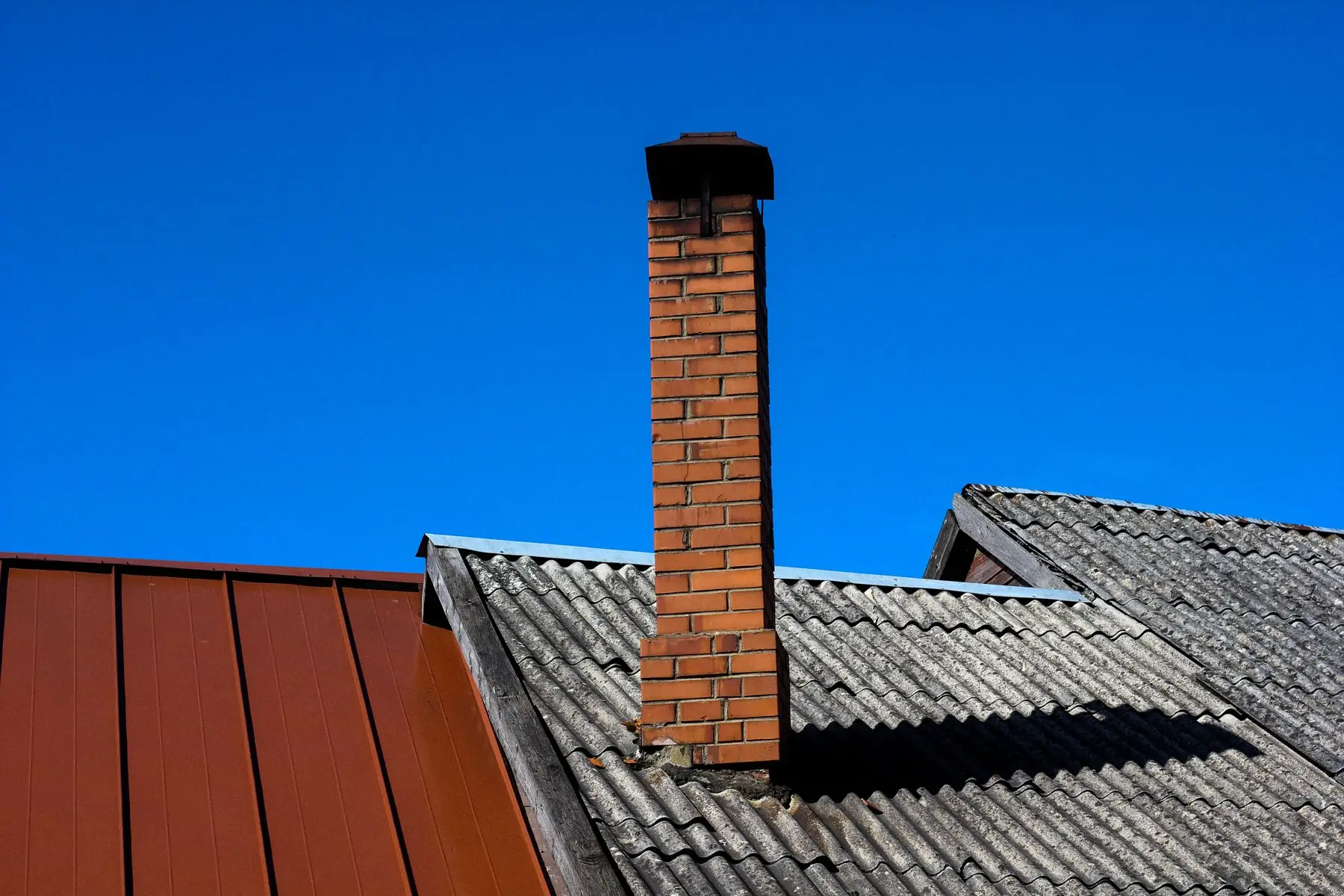 We switched from oil to gas. Does the old chimney need a liner?New gas furnace venting out the wall? The water heater may be left alone in a flue far too big for it. What the 2021 IRC says about resizing and lining.

Schedule
Choose a morning or an afternoon.
Sunday through Friday, arrival between 8 and 11, 11 and 2, or 2 and 5. The look costs nothing, and a person phones you the day before.